

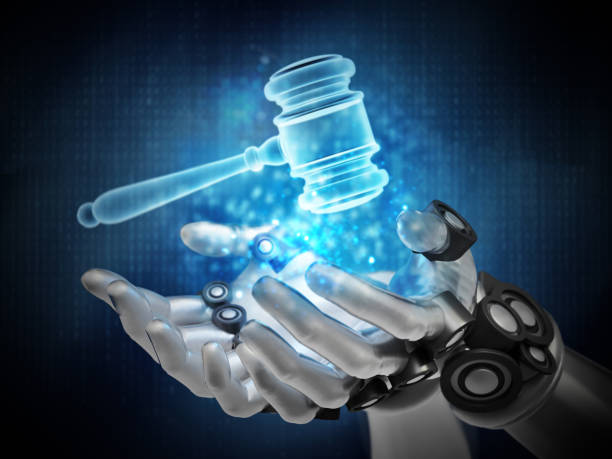
Source of the image: Generated through AI by the author
Artificial intelligence (AI) technologies have the potential to transform governance and bring about a paradigm shift in citizen-centric delivery of services. Imagine a student applying for college admissions. Instead of separately applying for numerous universities and colleges with the need for filling multiple applications with repetitive data each time, an AI-driven system would proactively collate the basic demographic information about the student and suggest the probable list of colleges based on his/her score in the qualifying examination. It would even fill out a common application form for admission to various institutions and automatically apply for various scholarships for which the student might be eligible based on demographic and income criteria. At the other end, the selection and allotment of seats by the universities and colleges would become much easier and faster with the AI-driven system seamlessly sorting the preferences, allocating seats and awarding eligible scholarships to each student. The above system can easily be operated at the state and national levels. The resultant savings in time, cost and efforts for all the stakeholders would be enormous.
The above vision of an AI-driven and proactive governance can easily be replicated in many other domains, e.g., health care, agriculture, crime detection and prevention, cyber security, etc. In health care, AI can help in much faster diagnosis and detection of diseases through analysis of scans, etc. enabling better treatment, remote care, and substantial savings in time and cost for the patients and hospitals. Similarly, predictive data analytics can provide deep insights into patterns of crime and suggest more effective prevention strategies through proactive policing. AI algorithms can analyse traffic flow patterns and suggest better route planning and optimization to reduce congestion. AI-enabled chatbots can provide very specific and contextualized responses in multiple languages to queries from citizens and even deliver a wide range of citizen-centric services, e.g., access to various certificates, education and medical records, etc. They can become invaluable tools in information dissemination and driving citizen engagement.
AI can also enable transformation of the government itself through smarter policy formulation driven by predictive analytics and evidence-based decision making. It can help in formulating proactive strategies and implementing an agile framework for governance.
As outlined above, AI-driven governance can herald a new era of transformation, innovation and efficiency. However, to achieve this vision, the government must take a number of enabling policy initiatives.
First, it must ensure that there are adequate investments in AI focused compute infrastructure and R&D by both the public and private sectors to fuel innovation and development of new applications. Government driven investments in AI infrastructure and R&D will also help in creating a vibrant startup ecosystem in India that can focus on developing AI based applications in various domains.
Second, the government must evolve and put in place a regulatory framework for AI that encourages innovation while at the same time recognizing and mitigating the risks that may be associated with the development and implementation of AI technologies and applications.
Third, the government must enable access to large amounts of anonymized domain datasets which the concerned central ministries and states have built in the course of implementing a very large number of e-governance projects over the past few decades. This will enable the industry and startups to develop and train innovative AI applications for various domains.
Fourth, the industry must focus on ethical development and deployment of AI applications. This would ensure transparency and accountability in the entire process allowing for identification and mitigation of any biases and promotion of fairness and trust amongst all the stakeholders including the end-users.
Fifth, privacy preserving technologies and stringent data security protocols must be followed in the development and deployment of AI applications. This will help in mitigating any risks of data breaches and cyber frauds. It is also essential that all precautions to ensure cybersecurity in the entire infrastructure and application ecosystem are taken.
Last but not least, skilling for AI to meet the burgeoning needs of the industry is of paramount importance. Our best technical institutions must focus on advanced education and R&D while the industry can focus on targeted training programmes in niche areas to build adequate human resource capacity in AI. While India is a global leader in information technology services, when it comes to government readiness for AI, a recent report by Oxford Insights ranks India at the 40th position out of 193 nations. For making India a global leader in AI, it is the right time to focus on AI-driven governance for transforming the government and reimagining public service delivery.
(The above article appeared in The Economic Times on 28th June, 2024. It is available here: https://economictimes.indiatimes.com/tech/artificial-intelligence/transforming-governance-through-ai/articleshow/111543404.cms?from=mdr. The views are personal.)
 Ideas That Make You Think And Do