Digital India 2.0: Digital Transformation for Viksit Bharat @2047

Digital Transformation and Economic Growth

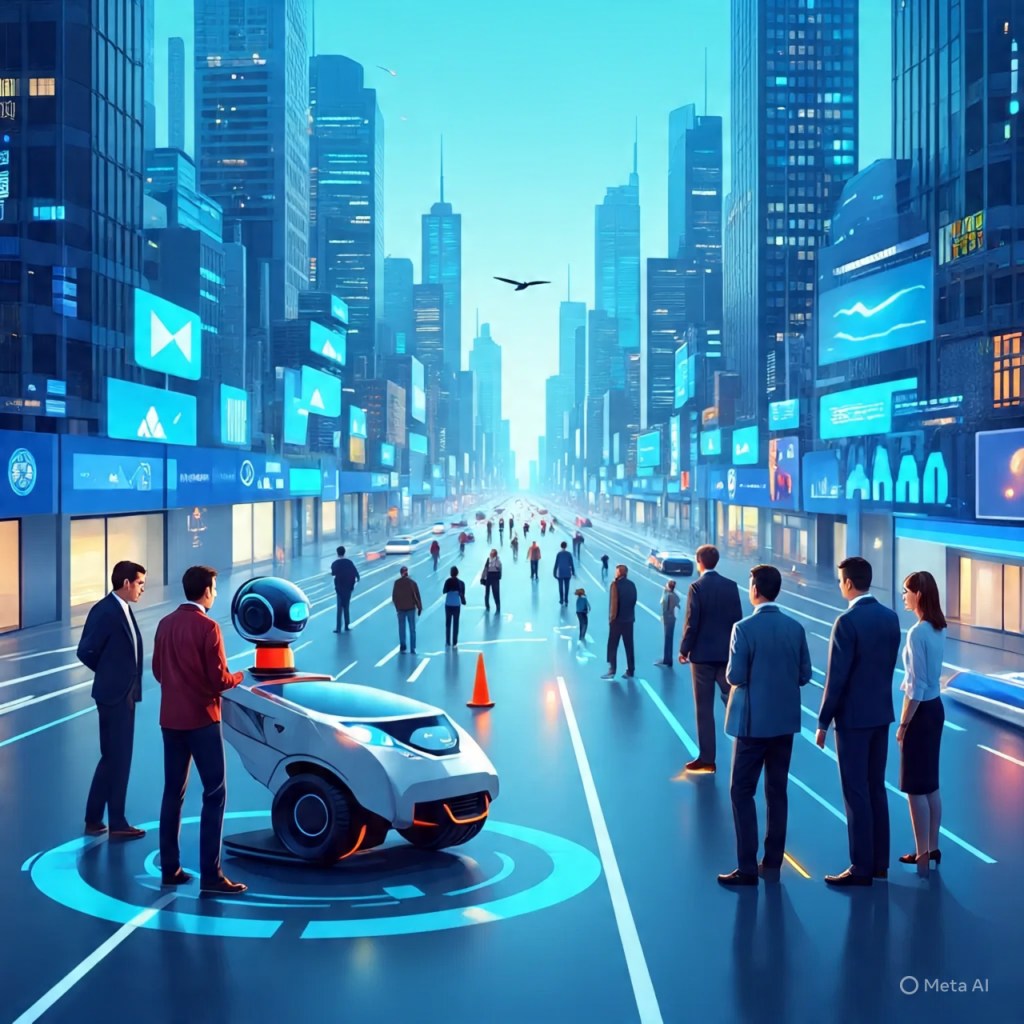
Source: Generated using Meta AI by the author

Viksit Bharat @2047 aims to transform India into a developed nation by 2047. Broadly, the vision of Viksit Bharat can be divided into five key thematic areas: thriving and sustainable economy; empowering citizens; innovation, science and technology; good governance and security; and enhancing India’s global standing. As India has achieved remarkable success in digitalising its economy under the Digital India programme, can this programme be reimagined to leverage digital transformation in these areas to achieve the vision of Viksit Bharat?

Digitalization can significantly contribute to a thriving economy. India’s over $400 billion digital economy in itself is a major contributor to the overall economy and its continued growth is essential for achieving the vision of Viksit Bharat. Digital public infrastructure (DPI) like Aadhaar and UPI have revolutionalised online identity authentication and payments and have empowered individuals and businesses. Similar DPI initiatives, public-private partnerships (PPPs) and leveraging Artificial Intelligence (AI) and other emerging technologies can digitally transform sectors like manufacturing, healthcare, education, agriculture, etc. and enhance economic growth. 

Improving access to digital services and infrastructure and digital empowerment through initiatives like BHASHINI can enhance digital inclusion, particularly for disadvantaged communities.  

Digital transformation is also essential for fostering innovation and technological advancement. It can also be used to promote green technologies and sustainable practices. Smart cities initiative is already showing how scalable digital transformation and PPPs can address challenges like sustainable urban planning and climate change. Digitalisation can also enhance good governance and improve India’s standing as a global leader in sustainable economic growth.

To achieve the vision of Viksit Bharat and create such an economy and society wide impact over the next two decades, the Digital India programme needs to be reimagined as a cross-sectoral mission based on a whole of government and whole of society framework.

This new mission, Digital India 2.0, needs to be architected on certain key foundations for accelerating digital transformation across various sectors. First, it needs to focus on creating world-class digital infrastructure including AI-ready data centres and high-speed connectivity through fibre and mobile reaching all villages. With AI emerging as a key platform technology that would drive transformation across various sectors in future, the need for making India a global hub for AI-ready data centres with high-performance hardware and robust network infrastructure cannot be overemphasized. Expansion of data centre infrastructure would also address the need to ensure data privacy, security and data storage within the country.

Second, digital government and digital services need to undergo a major transformation through a focus on delivering integrated, pro-active and personalised services using AI. This would require building a unified AI stack as a digital public infrastructure (DPI) comprising AI-ready data centres, access to curated data sets, and AI models and applications to enable the ministries and departments to develop their own use cases quickly. 

Third, the growth of the digital economy needs to be accelerated so that its share increases to at least 25% of the overall GDP of $30 trillion by 2047 from its present level of around 11%. This requires sustained growth in electronics and semiconductors, IT-ITES, and emerging technologies, such as AI, 6G, quantum computing, IoT, etc. However, a major contribution to the growth of the digital economy is likely to come from digitalisation of the traditional sectors, e.g., agriculture, health, education, financial services, retail, etc. Building a vibrant start-up ecosystem in these domains is essential for achieving this goal.

Fourth, we need to revamp our legal and regulatory framework to support the rapid growth of the digital economy. The major issues that need to be addressed include concerns on data privacy, cyber security, accountability of online platforms including social media, and fairness and transparency of AI algorithms. Though privacy concerns have been addressed through the new Digital Personal Data Protection (DPDP) Act, a full revamp of the 25 year old IT Act needs to be undertaken to address these issues comprehensively.

Fifth, rapid advancements in strategic and emerging technologies with ownership of intellectual property is a sine qua non for becoming a global leader in digital economy. We need to quickly formulate national strategies in these critical areas and fund the flagship initiatives. The IndiaAI Mission is a step in the right direction. However, we need to build our own foundational models in AI to ensure strategic autonomy in this rapidly advancing technology. Similarly, a national policy on data governance also needs to be formulated to ensure easier access to data by all the ministries, states, industry, start-ups, researchers, etc. This would allow rapid innovations to happen in these technologies.

Last, but not the least, skilling and capacity building in digital technologies at all levels is vital for rapid growth in the digital economy. India should rightly aim at becoming the skill and talent capital of the world.

Digital India 2.0, with its focus on a whole-of-government and whole-of-society approach, can accelerate digital transformation across various sectors to achieve the vision of Viksit Bharat.

(The views expressed are personal.)

Featured

How DIGITAL Has Become a Key Driver of the Indian ECONOMY

Source: https://www.istockphoto.com/photos/digital-economy-india

India has emerged as a shining star on the global economic horizon as the world recovers from the aftermath of the pandemic. India was the world’s fastest growing major economy in 2021 and 2022 and will continue to be so during the current and the next few years as well. During FY23, the Indian economy is projected to grow by 7.0%, while the latest forecast by The World Bank for FY24 is 6.6%. In contrast, the global economy is expected to grow by just 1.7% during 2023. India would be thus, for the first time in many decades, driving the global economy, even as most of the major economies are witnessing a significant slowdown in economic growth.

One of the key factors that is driving this economic transformation in India is its rapidly growing digital economy. Digital economy has prospered greatly under the Digital India programme and is expected to reach $1 trillion by FY27 from its current level of about $300 billion, thus increasing its share in the GDP from around 9% currently to about 20% during this period. Digital economy would thus be a key driver for our overall economic growth in the coming years.

How has the Digital Economy Become so Vital to the Country’s Broader Economy?

Across the board digitalisation in both public and private sectors is helping in generating innovation and unlocking major efficiency and productivity gains. The government has created several major cross-cutting national public digital platforms, such as Aadhar for digital identity, Unified Payments Interface (UPI) for online payments, Government e-Marketplace (GeM) for public procurement, Goods and Services Tax Network (GSTN) for indirect taxation, GatiShakti for logistics, etc. that have completely transformed the way government agencies deliver services and how businesses operate.

These platforms have enabled the government to make all citizen and business centric services fully online, and businesses to digitalize their operations and realize payments and tax refunds without delay. Fully online Account Aggregators are now making credit available to individuals and MSMEs easily without any paperwork through consent-based online data sharing.  These are bringing major improvements in the flow of credit and efficient utilisation of resources across the entire economy.

Massive digitalisation by the government in almost all domains of governance has also helped in improving both ease of doing business and ease of living for citizens. Most of the government agencies, at the central, state and local levels, have undertaken significant process re-engineering for digitalising their services and this has helped in making the entire approval process and delivery of services time-bound and predictable. This has been achieved despite the fact that most of the laws governing these domains have remained the same. 

What is Driving this Digital Transformation in India?

India has a young population with around 840 million internet users and a rapidly growing smartphone penetration even amongst the rural population. Availability of high-speed 4G network and the world’s cheapest data rates are bringing more and more people online. The adoption of digital technologies has also increased manifold during the pandemic, both for personal and professional activities. The increasing optic fibre penetration in villages under BharatNet and the quickly expanding 5G network would help in bringing the last 40% of our population online in the near future.  

Massive digitalisation in the economy has also helped our start-ups in creating businesses based on innovation and becoming competitive internationally. Today, a vast majority of nearly 80,000 startups are tech-focused with a combined valuation of around $450 billion. With over 100 unicorns, the Indian startup ecosystem is the third largest in the world.

With the advent of emerging technologies such as artificial intelligence, blockchain, augmented and virtual reality, Internet of Things, metaverse, Industry 4.0, etc., the contribution of digital economy to India’s economic growth is expected to gain further momentum in future. However, these are also expected to bring new challenges, especially in addressing online user harms, cybersecurity and protection of personal data and privacy.

To enable the digital economy to drive the next phase of growth in the broader economy, India would need to focus on creating a world-class digital infrastructure including new age data centres, become a global hub for electronics and semiconductor manufacturing, create world-leading public digital platforms in domains like healthcare, agriculture, education, logistics, etc., ensure cybersecurity, drive innovation through the emerging technologies, bring new legal and regulatory framework to deal with data sharing and personal data protection and focus massively on skilling. Achieving this vision for the next phase of Digital India will also make India the global leader in digital economy within this decade.  

The above article appeared in The Economic Times on 12th February, 2023 and is available here: https://economictimes.indiatimes.com/tech/catalysts/ettech-opinion-digital-a-key-driver-of-the-indian-economy/articleshow/97825464.cms?from=mdr. The views expressed are personal.

Featured

The Indian Pharmaceutical Industry: The Next Star On The Horizon

undefined

In the post-liberalization era, the IT sector has been the star performer in the Indian economic growth story in popular perception. The success of the pharmaceutical industry in India during the same period is not so well known, though it has also experienced rapid growth at a CAGR of around 12-15% consistently. The sector was valued at over US $37 billion in 2018. Pharma exports from India reached over US $19 billion in 2018-19 with over 20% of the global exports in generics coming from India. India supplies over 50% of the global demand for all vaccines and over 40% of all generics in the US. 

The Indian pharma sector currently accounts for about 10% of the global pharma industry in terms of volume and around 2.5% in terms of value. It is now ranked the third largest worldwide in volume terms and the 13th largest in terms of value. It is projected to grow to over US$50 billion by 2020. Under the ‘Pharma Vision 2020’, the government is committed to make India as the world’s leading destination for end-to-end drug discovery and innovation by 2020. How can this vision be achieved?   

There are several factors already present that are working to India’s advantage in the pharma sector. These include its ability to produce high quality medicines at comparatively cheaper costs and increasing private sector investments in R&D. Indian pharma companies are now investing around 8.5% of their sales on R&D. India also allows 100% FDI in the pharma sector under the automatic route. With increasing penetration of health insurance and improving drug affordability due to rising economic prosperity, India is well placed for a major expansion in this sector. However, to become the world leader in drug discovery and innovation, several key initiatives by the government and the industry need to be put in place.

Today, India primarily produces branded generics and has limited capabilities in R&D, new drug development and innovation.  As India has already introduced product patents, the Indian pharma companies need to increase their expenditure on R&D significantly to develop new drugs and boost sales.

Secondly, Indian companies also need to focus on diversifying exports beyond generics to gain market share and increase value addition. Currently, the Indian firms mostly focus on conventional tablets and capsules with very little presence in non-conventional dosage forms, advanced formulations and biotech-based medicines. This again requires higher focus on R&D and innovation. The Indian firms also need to expand their presence in new markets, notably in Latin America, Russia and Eastern Europe.

Thirdly, joint ventures with multinational companies can help in improving R&D and new drug discovery. The total cumulative FDI in the pharma sector stood at around US$ 16 billion during April 2000 to March 2019. There is good scope for attracting more FDI in this sector if there is greater focus on R&D and innovation. Expansion by Indian firms through acquisitions in overseas markets can also help in improving efficiencies and gaining market share.

India already has the key growth drivers in place for the pharma sector, both on the demand and the supply sides. On the demand side, rising incomes are improving the affordability of drugs and increasing penetration of insurance is helping in improving access to quality healthcare services. The PM Jan Aarogya Yojana is helping to expand the coverage of health insurance to a much wider section of the population including in the rural areas. The overall government expenditure on health has shown a CAGR of over 12% during the last seven years leading to a significant rise in healthcare services. On the supply side, India is already a major global hub for manufacturing of generics with over 22% of all the USFDA approved plants worldwide. India enjoys a significant cost advantage and the availability of skilled manpower would fuel further growth in this sector. About 120 drugs are expected to go off-patent during the next ten years with estimated US$80-250 billion revenue worldwide, which presents a big opportunity to the Indian firms.

To boost the growth of the pharma sector further, several policy measures need to be taken. These include reduction in time required for approval of new manufacturing facilities and NOC for export licenses, single window clearance mechanism for drug approvals, and support for technology upgradation. The recent move by the government to set up mega pharmaceutical parks would help in reducing dependence on imports of APIs or bulk drugs. The National Biopharma Mission is expected to support the development of biopharmaceuticals and new drug development in India. India already enjoys several advantages in the pharmaceutical sector due to its low cost of production, availability of skilled human resources and world-class manufacturing facilities. However, it needs to significantly boost R&D and innovation and focus on new drug discovery.  If appropriate initiatives by the government and the industry are taken to develop the sector further, it can certainly become the next star on the horizon and make India the world leader in pharmaceuticals.

Source of the image: https://www.europeanpharmaceuticalreview.com/news/65288/indias-pharmaceutical-100bn/

Featured

Single Window Portal: Improving the Ease of Doing Business in Tamil Nadu for the MSMEs

Introduction

The Micro, Small and Medium Enterprises (MSME) sector is an important, highly vibrant and dynamic sector of the Indian economy as it has contributed greatly to the economic growth over the years. The MSMEs manufacture more than 6000 products, contributing about 45% to manufacturing and around 40% to exports. With its agility and dynamism, the sector has shown an admirable innovativeness and adaptability to survive the recent economic scenario. It is the MSME sector which can help realize the target of the National Manufacturing Policy of raising the share of manufacturing sector in GDP from 16% at present to 25% by the end of 2022.

MSMEs in Tamil Nadu

There has been a phenomenal growth of MSMEs in Tamil Nadu. MSMEs produce a wide variety of products in almost all sectors. The prominent among them are textile, garments, engineering products, auto components, leather products, plastics, etc. 

Around 20.13 lakh entrepreneurs have filed the Entrepreneurs’ Memorandum (EM) Acknowledgement Part-II and Udyog Aadhaar Memorandum (UAM), providing employment opportunities to about 128.91 lakh persons with a total investment of over Rs 2.23 lakh crores.

Improving the Ease of Doing Business

The Government of Tamil Nadu has enacted the Tamil Nadu Business Facilitation Act, 2018 to enhance the ease of doing business in the state. The Act provides for single point receipt of applications for securing clearances that are required to establish or expand an enterprise and for those required during the normal course of business including renewals in a time-bound manner. The Act also provides for an effective grievance redressal mechanism and fine in case of failure of Competent Authorities to act within a time frame and for matters connected therewith or incidental thereto.

The Act covers 54 clearances which include pre-establishment, pre-operation, renewals, incentives, etc. District Industries Centres and Guidance Bureau are designated as the Nodal Agencies for MSMEs and large industries respectively for operating the single window mechanism.

The Act provides for a 3 tier institutional structure to monitor and review the progress of single window mechanism for the MSMEs:

  • District MSME Single Window Committee
  • State MSME Single Window Committee and
  • MSME Investment Promotion and Monitoring Board.

Single Window Portal

The Commissionerate of Industries and Commerce of the Government of Tamil Nadu has taken a number of steps to improve the ease of doing business and create an investor-friendly climate in the state to promote investments in the MSME sector. The most important initiative in this regard has been to create an online Single Window Portal exclusively for the MSMEs to enable them to obtain approvals and ‘No Objection Certificates (NoCs)’ from various government departments and agencies for establishing their enterprises. It allows the MSMEs to obtain all the approvals and NoCs through a single Composite Application Form (CAF) from 12 government departments and agencies in the state including the Directorate of Town and Country Planning (DTCP), Tamil Nadu Pollution Control Board (TNPCB), Fire Department, Directorate of Industrial Safety and Health (DISH), Public Health, Rural Development and Panchayati Raj (RD&PR) and Tamil Nadu Generation and Distribution Corporation Limited (TANGEDCO). The approvals cover pre-establishment, operation and renewal stages and the entire process is completely online including payment of fees. All the departments and agencies are required to give approvals online within a defined time-frame after the complete application has been submitted. The application need not submit any paper documents and need not visit any government office in person.

The portal may be accessed at https://easybusiness.tn.gov.in/msme/.  The portal has the following features:

  • Single point acceptance and electronic distribution of applications to the respective Competent Authorities without the need for applicants to physically visit the concerned offices.
  • Custom generation of forms for individual Competent Authorities along with requisite attachments.
  • Single point of capture of information with the feature of auto-population of data.
  • Online approval by the concerned Competent Authorities and provision to download the certificate online.
  • Online tracking/automatic alerts to applicants through SMS/emails.
  • Customized online MIS reports for monitoring at different levels.

Online Implementation of All Schemes and Incentives for MSMEs

The Commissionerate of Industries and Commerce has taken another major step towards improving the ease of doing business in the state for the MSMEs by making the implementation of all the schemes and incentives for them completely online. The portals for the various schemes and incentives are given below:

Loan Schemes:

  1. NEEDS : https://msmeonline.tn.gov.in/needs/index.php
  2. UYEGP: https://msmeonline.tn.gov.in/uyegp/index.php
  3. PMEGP: https://www.kviconline.gov.in/pmegpeportal/pmegphome/index.jsp

Incentive Schemes:

  1. Capital Subsidy: https://msmeonline.tn.gov.in/incentives/capital/index.php
  2. LTPT Subsidy: https://msmeonline.tn.gov.in/incentives/index.php
  3. Generator Subsidy: https://msmeonline.tn.gov.in/incentives/index.php
  4. Interest Subvention:               https://msmeonline.tn.gov.in/incentives/is/index.php
  5. Promotion of Energy Audit and Conservation of Energy (PEACE):                             https://msmeonline.tn.gov.in/incentives/index.php
  6. Amma Skill Training and Employment Scheme: https://msmeonline.tn.gov.in/ammaskill/index.php

It is relevant to note that all the above initiatives have been implemented with full involvement of all the relevant stakeholders, e.g., MSME associations at the state and district levels and the District Industries Centers in the districts. In recognition of its successful efforts to implement the Single Window Portal and transform the implementation of various schemes and incentives for the MSMEs through online applications, the Commissionerate of Industries and Commerce has been awarded the ISO 9001:2015 certification by the Bureau of Indian Standards (BIS) in July 2019.

Conclusion

Tamil Nadu is a leading state in the country in the MSME sector, both in terms of its overall size and the varieties of products that it produces. It is poised to achieve even greater heights in the years to come with a number of initiatives already being implemented in the state to improve the ease of doing business for the MSMEs. The Commissionerate of Industries and Commerce is actively working with all the stakeholders in the MSME ecosystem in the state to ensure that it is able to support the growth of the sector even further.

(The author is a senior IAS officer in Tamil Nadu and is currently working as the Principal Secretary/Industries Commissioner and Director of Industries and Commerce, Government of Tamil Nadu. The views are personal.)

Nurturing Startups As Engines Of Economic Growth And Job Creation

Startups play a very important role in economic growth and employment creation. They also drive innovation and create fresh competition for the incumbent firms, thereby lowering costs and enhancing efficiency.  As these startups grow, they contribute significantly to the economic dynamism of the cities and regions they inhabit, attracting more firms to these regions and creating a virtuous cycle of innovation, economic growth and employment generation. We just need to look at how Infosys transformed Bangalore, Microsoft transformed Redmond and Google changed Mountain View to understand the multiple impacts that startups can have on the economic growth of cities and regions.  As they grow and become public, they also generate immense wealth for their employees and shareholders.

How can a developing country like India benefit from nurturing startups? As a nation grappling with the issue of employment generation for the masses, we must realize that most of the new employment has to be created by the private sector. It is in this context that promoting startups, and entrepreneurship in general, can play a crucial role in our economy. However, how strong is our startup ecosystem and what policies are needed to make it grow further? Some estimates suggest that today, India is home to close to 50,000 startups from just around 7,000 in 2008. In terms of the size of the ecosystem, we are the third largest in the world, next only to the US and China. As per a study by NASSCOM and Zinnov Consulting, during the last five years alone, around 7,500 technology based startups have been incepted and the overall startup base has grown at a rate of 12-15% during 2018. Total investment into startups has also grown sharply to $4.2 billion in 2018. India is now home to 18 unicorns, startups with a valuation of over $1 billion. Eight of these unicorns have been added during the last year alone. These startups have directly created around 40,000 new jobs during 2018 with the indirect jobs created estimated at around one lakh. The main verticals where a majority of the technology driven startups are emerging include enterprise software, FinTech, e-commerce marketplaces, HealthTech and EduTech. Advanced technologies driving the expansion in these verticals include data analytics, AI, IoT, Blockchain, and AR/VR.  

There are some key features of the fast evolving startup ecosystem in India. Contrary to popular perception, over 40% of the new startups are being incepted outside the main metros in the country, though Bangalore, Delhi NCR and Mumbai continue to lead as the main startup hubs. However, newer hubs like Jaipur, Trivandrum, Chandigarh, Ahmedabad and Pune are fast emerging. To support the growth of startups, over 200 incubators and accelerators are active across the country, supported by the industry, educational institutions and governments. There has also been a significant rise in international exchange missions, allowing the homegrown startups to expand globally.   

What are the key drivers behind the growth of the startups in India? India is the world’s fastest growing major economy with a growth rate of over 7% and has an internet user base of over 56 crores, which is second only to China in the world. A fast growing economy combined with a large internet user base is opening up unprecedented opportunities for technology focused startups to grow with innovative products and business models. It has also attracted huge funding for the startups. Increasing digitalization in the government through initiatives like the Digital India programme and policies focused on financial inclusion are also driving growth in this sector. The growing number of incubators and accelerators across the country has also helped the startups to get mentor support, tap various sources of funding and develop linkages with the industry.

Initiatives like Startup India have helped the sector through tax exemptions and easy access to financing. Over 20 states have their own focused policies for supporting the startups in their states. These policies focus on mentorship, setting up institutional structures to support the startups, developing partnerships with the industry, online accessibility and improving the ease of doing business. Some states like Karnataka have specific policies to encourage women entrepreneurs.

How can our startup ecosystem grow further and become more competitive globally? To achieve this objective, some specific initiatives must be taken. Early stage startups face two key problems: that of access to finance and markets. Institutional support, both by the government and the private sector, must be strengthened to address these twin issues. Government must also encourage procurement of good and services from the startups by its departments and organizations. Startups should also be supported for obtaining quality certifications, testing, patent filing, etc. at affordable costs. Finally, the governments and the industry must work together to strengthen the growing ecosystem of incubators and accelerators to provide well-developed toolkits, focused training programmes, access to funding, industry linkages and a well-connected network of mentors. With quality institutional support from the government and the industry, startups can certainly contribute much more to innovation, economic growth and employment generation in the country and become competitive globally.

(The above article was originally published on May 6, 2019 in DT Next. It is available at: https://www.dtnext.in/News/Business/2019/05/06005513/1116987/Nurturing-startups-as-engines-of-economic-growth-and-.vpf).