
Secretary (border management) says to be effective in securing and managing borders, stakeholders need to synergise efforts through tech-intensive surveillance.
Published : February 19, 2026 at 3:46 PM IST
By Gautam Debroy
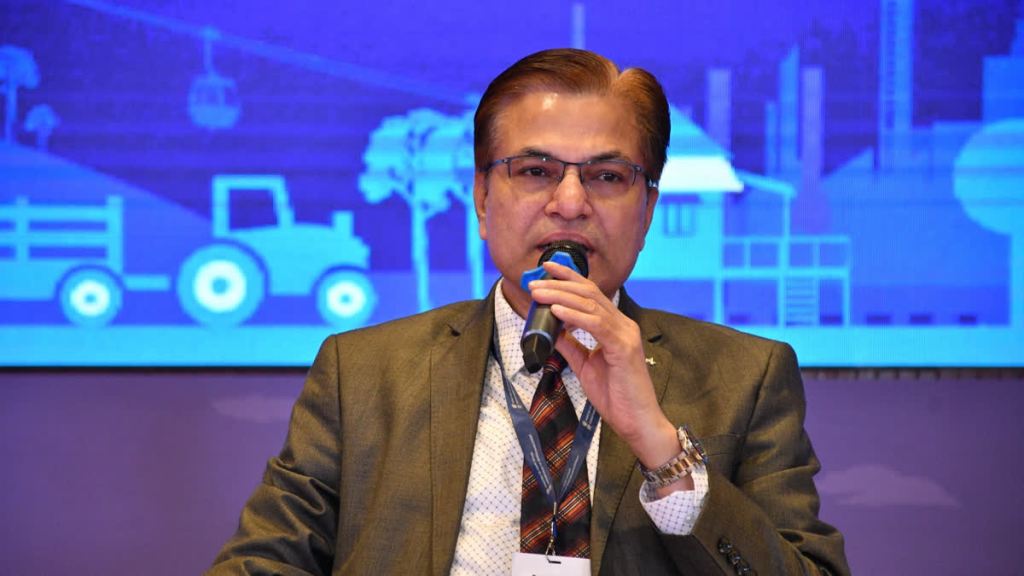
New Delhi: Stating that Artificial Intelligence (AI) can play an important role in transforming border management by enhancing and strengthening India’s ISR (Intelligence, Surveillance and Reconnaissance) ecosystem, Rajendra Kumar, Secretary (Border Management), said on Thursday that technologies like AI-powered surveillance sensors, drones, etc. can be very useful in monitoring challenging terrain and detecting threats in real time.
“AI can also play an important role in resource optimisation and optimal deployment of our border guarding forces for effective management of border areas. By enabling faster, data-driven decisions, AI can significantly improve efficiency in managing complex border security challenges,” he said, in an exclusive interview with ETV Bharat.
When asked whether AI has been used in border management, Kumar said, “As these technologies are constantly evolving, various stakeholders managing the borders would need to synergise their efforts through tech-intensive surveillance to be effective in securing and managing our borders. The use cases for deploying AI in border management are also constantly evolving.”
AI For Defence
Kumar said AI can act as a critical force multiplier in national defence, by accelerating decision-making, enhancing surveillance, and optimising logistics.
“AI-powered systems can analyse vast amounts of satellite, drone, and sensor data, to detect border intrusions and identify threats in real time. In cybersecurity, AI can identify and mitigate threats faster than humans, securing critical infrastructure. AI can drive unmanned autonomous vehicles (UAVs) and robotic systems for high-risk reconnaissance, protecting personnel,” he said.
According to Kumar, AI can also enable predictive maintenance of military equipment, ensuring operational readiness. “Ultimately, AI increases battlefield intelligence, agility, and efficiency,” he said.
Improve Governance, Services, Last-Mile Delivery
The border management secretary also said that AI can improve governance, delivery of citizen-centric services and last mile delivery, by automating administrative tasks, using predictive analytics for data-driven policymaking and fostering transparency.
“Citizen-centric services can be improved via multilingual AI chatbots, personalised services in various domains like health and education, and faster, automated grievance redressal. For this, the government needs to develop a full AI stack, comprising AI compute infrastructure and models, which will enable various ministries and departments to quickly develop and deploy their own applications for various use cases. Together, these innovations can enhance public service delivery, making it more efficient and inclusive,” he said.
AI Summit A Showcase Of Whole-Of-Nation Approach
“I think hosting the India AI Impact Summit 2026 is a major achievement for the country, which will enhance its global leadership in digital and emerging technologies. It helps in bringing the focus sharply on ‘AI for Development’ and in prioritising tangible, population-scale solutions using AI,” said Kumar.
He said the summit showcases our unique “whole-of-nation” approach towards the development and deployment of AI, utilising Digital Public Infrastructure (DPI) to democratise technology and ensure equity in access.
“This initiative also helps bridge the global AI divide, showcasing how AI can drive sustainable growth and empower underserved communities,” Kumar said.
India A Leading AI User & Creator
According to Kumar, India is rapidly emerging as a leading AI user and creator, focusing on a ‘bottom-up’ approach through population-scale applications and DPI. “Ranked among the top three nations in the world in AI competitiveness, India is leveraging its massive talent pool and a rapidly growing start-up ecosystem, with over 30,000 AI-focused start-ups to drive innovation at scale. Its light-touch regulatory approach, combined with its rich and diverse data, positions it as a critical and unique player in the global AI landscape,” said Kumar.
To further develop India’s AI ecosystem, Kumar said we need to focus on boosting our sovereign AI capabilities and build localised, multilingual AI-driven solutions in diverse domains, such as healthcare, education, agriculture, logistics, etc.
(The above interview was published on February 19, 2026 on ETV Bharat. It is available at: https://www.etvbharat.com/en/bharat/ai-surveillance-useful-in-monitoring-challenging-terrain-detecting-real-time-threats-rajendra-kumar-enn26021903615)

 Ideas That Make You Think And Do