Digital India 2.0: Digital Transformation for Viksit Bharat @2047

Digital Transformation and Economic Growth

Source: Generated using Meta AI by the author

Viksit Bharat @2047 aims to transform India into a developed nation by 2047. Broadly, the vision of Viksit Bharat can be divided into five key thematic areas: thriving and sustainable economy; empowering citizens; innovation, science and technology; good governance and security; and enhancing India’s global standing. As India has achieved remarkable success in digitalising its economy under the Digital India programme, can this programme be reimagined to leverage digital transformation in these areas to achieve the vision of Viksit Bharat?

Digitalization can significantly contribute to a thriving economy. India’s over $400 billion digital economy in itself is a major contributor to the overall economy and its continued growth is essential for achieving the vision of Viksit Bharat. Digital public infrastructure (DPI) like Aadhaar and UPI have revolutionalised online identity authentication and payments and have empowered individuals and businesses. Similar DPI initiatives, public-private partnerships (PPPs) and leveraging Artificial Intelligence (AI) and other emerging technologies can digitally transform sectors like manufacturing, healthcare, education, agriculture, etc. and enhance economic growth. 

Improving access to digital services and infrastructure and digital empowerment through initiatives like BHASHINI can enhance digital inclusion, particularly for disadvantaged communities.  

Digital transformation is also essential for fostering innovation and technological advancement. It can also be used to promote green technologies and sustainable practices. Smart cities initiative is already showing how scalable digital transformation and PPPs can address challenges like sustainable urban planning and climate change. Digitalisation can also enhance good governance and improve India’s standing as a global leader in sustainable economic growth.

To achieve the vision of Viksit Bharat and create such an economy and society wide impact over the next two decades, the Digital India programme needs to be reimagined as a cross-sectoral mission based on a whole of government and whole of society framework.

This new mission, Digital India 2.0, needs to be architected on certain key foundations for accelerating digital transformation across various sectors. First, it needs to focus on creating world-class digital infrastructure including AI-ready data centres and high-speed connectivity through fibre and mobile reaching all villages. With AI emerging as a key platform technology that would drive transformation across various sectors in future, the need for making India a global hub for AI-ready data centres with high-performance hardware and robust network infrastructure cannot be overemphasized. Expansion of data centre infrastructure would also address the need to ensure data privacy, security and data storage within the country.

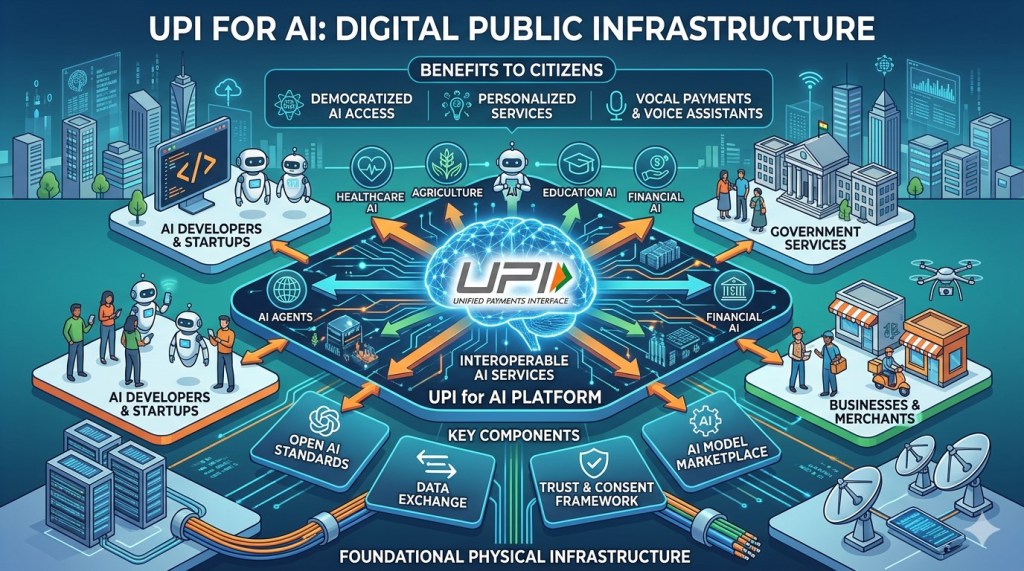
Second, digital government and digital services need to undergo a major transformation through a focus on delivering integrated, pro-active and personalised services using AI. This would require building a unified AI stack as a digital public infrastructure (DPI) comprising AI-ready data centres, access to curated data sets, and AI models and applications to enable the ministries and departments to develop their own use cases quickly. 

Third, the growth of the digital economy needs to be accelerated so that its share increases to at least 25% of the overall GDP of $30 trillion by 2047 from its present level of around 11%. This requires sustained growth in electronics and semiconductors, IT-ITES, and emerging technologies, such as AI, 6G, quantum computing, IoT, etc. However, a major contribution to the growth of the digital economy is likely to come from digitalisation of the traditional sectors, e.g., agriculture, health, education, financial services, retail, etc. Building a vibrant start-up ecosystem in these domains is essential for achieving this goal.

Fourth, we need to revamp our legal and regulatory framework to support the rapid growth of the digital economy. The major issues that need to be addressed include concerns on data privacy, cyber security, accountability of online platforms including social media, and fairness and transparency of AI algorithms. Though privacy concerns have been addressed through the new Digital Personal Data Protection (DPDP) Act, a full revamp of the 25 year old IT Act needs to be undertaken to address these issues comprehensively.

Fifth, rapid advancements in strategic and emerging technologies with ownership of intellectual property is a sine qua non for becoming a global leader in digital economy. We need to quickly formulate national strategies in these critical areas and fund the flagship initiatives. The IndiaAI Mission is a step in the right direction. However, we need to build our own foundational models in AI to ensure strategic autonomy in this rapidly advancing technology. Similarly, a national policy on data governance also needs to be formulated to ensure easier access to data by all the ministries, states, industry, start-ups, researchers, etc. This would allow rapid innovations to happen in these technologies.

Last, but not the least, skilling and capacity building in digital technologies at all levels is vital for rapid growth in the digital economy. India should rightly aim at becoming the skill and talent capital of the world.

Digital India 2.0, with its focus on a whole-of-government and whole-of-society approach, can accelerate digital transformation across various sectors to achieve the vision of Viksit Bharat.

(The views expressed are personal.)

Transforming Governance through AI

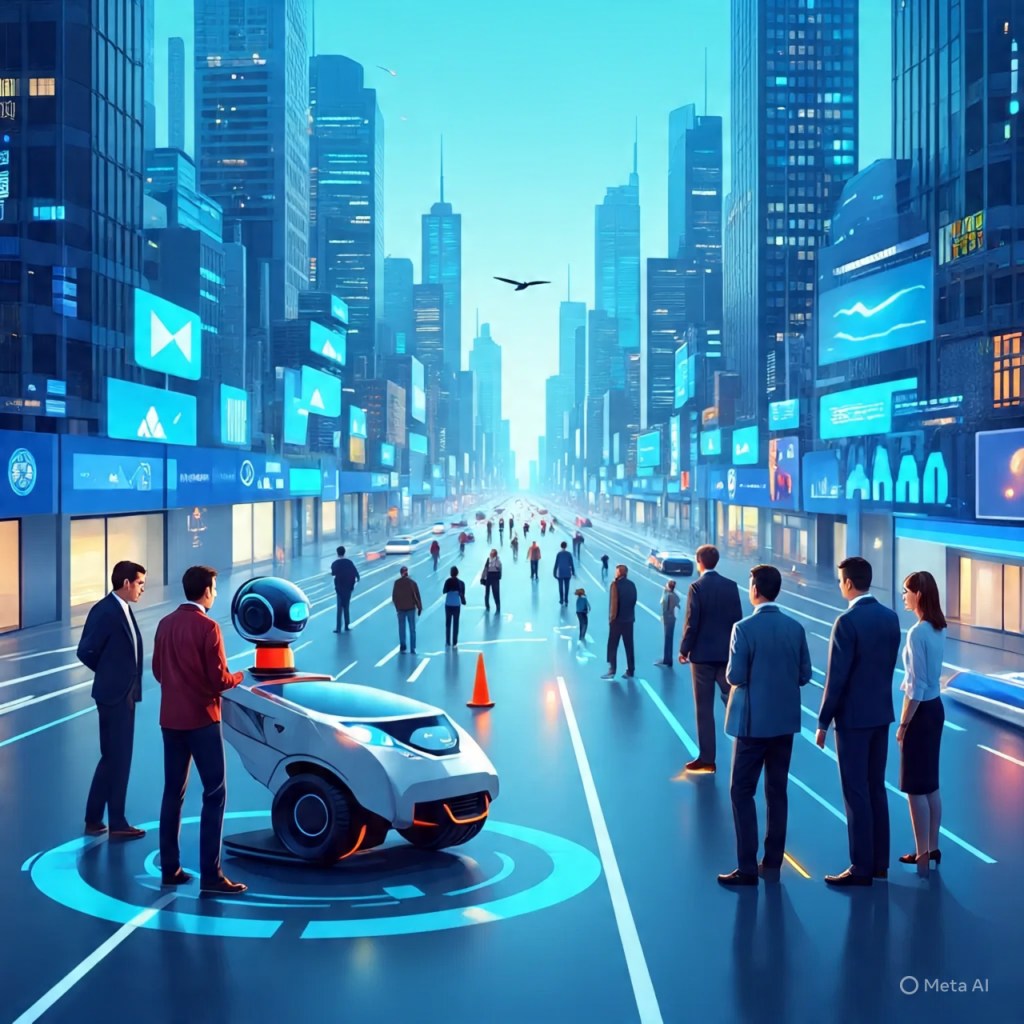
Source of the image: Generated through AI by the author

Artificial intelligence (AI) technologies have the potential to transform governance and bring about a paradigm shift in citizen-centric delivery of services. Imagine a student applying for college admissions. Instead of separately applying for numerous universities and colleges with the need for filling multiple applications with repetitive data each time, an AI-driven system would proactively collate the basic demographic information about the student and suggest the probable list of colleges based on his/her score in the qualifying examination. It would even fill out a common application form for admission to various institutions and automatically apply for various scholarships for which the student might be eligible based on demographic and income criteria. At the other end, the selection and allotment of seats by the universities and colleges would become much easier and faster with the AI-driven system seamlessly sorting the preferences, allocating seats and awarding eligible scholarships to each student. The above system can easily be operated at the state and national levels. The resultant savings in time, cost and efforts for all the stakeholders would be enormous.

The above vision of an AI-driven and proactive governance can easily be replicated in many other domains, e.g., health care, agriculture, crime detection and prevention, cyber security, etc. In health care, AI can help in much faster diagnosis and detection of diseases through analysis of scans, etc. enabling better treatment, remote care, and substantial savings in time and cost for the patients and hospitals. Similarly, predictive data analytics can provide deep insights into patterns of crime and suggest more effective prevention strategies through proactive policing. AI algorithms can analyse traffic flow patterns and suggest better route planning and optimization to reduce congestion. AI-enabled chatbots can provide very specific and contextualized responses in multiple languages to queries from citizens and even deliver a wide range of citizen-centric services, e.g., access to various certificates, education and medical records, etc. They can become invaluable tools in information dissemination and driving citizen engagement.

AI can also enable transformation of the government itself through smarter policy formulation driven by predictive analytics and evidence-based decision making. It can help in formulating proactive strategies and implementing an agile framework for governance.

As outlined above, AI-driven governance can herald a new era of transformation, innovation and efficiency. However, to achieve this vision, the government must take a number of enabling policy initiatives.

First, it must ensure that there are adequate investments in AI focused compute infrastructure and R&D by both the public and private sectors to fuel innovation and development of new applications. Government driven investments in AI infrastructure and R&D will also help in creating a vibrant startup ecosystem in India that can focus on developing AI based applications in various domains.

Second, the government must evolve and put in place a regulatory framework for AI that encourages innovation while at the same time recognizing and mitigating the risks that may be associated with the development and implementation of AI technologies and applications.

Third, the government must enable access to large amounts of anonymized domain datasets which the concerned central ministries and states have built in the course of implementing a very large number of e-governance projects over the past few decades. This will enable the industry and startups to develop and train innovative AI applications for various domains.  

Fourth, the industry must focus on ethical development and deployment of AI applications. This would ensure transparency and accountability in the entire process allowing for identification and mitigation of any biases and promotion of fairness and trust amongst all the stakeholders including the end-users.

Fifth, privacy preserving technologies and stringent data security protocols must be followed in the development and deployment of AI applications. This will help in mitigating any risks of data breaches and cyber frauds. It is also essential that all precautions to ensure cybersecurity in the entire infrastructure and application ecosystem are taken.

Last but not least, skilling for AI to meet the burgeoning needs of the industry is of paramount importance. Our best technical institutions must focus on advanced education and R&D while the industry can focus on targeted training programmes in niche areas to build adequate human resource capacity in AI. While India is a global leader in information technology services, when it comes to government readiness for AI, a recent report by Oxford Insights ranks India at the 40th position out of 193 nations. For making India a global leader in AI, it is the right time to focus on AI-driven governance for transforming the government and reimagining public service delivery.

(The above article appeared in The Economic Times on 28th June, 2024. It is available here: https://economictimes.indiatimes.com/tech/artificial-intelligence/transforming-governance-through-ai/articleshow/111543404.cms?from=mdr. The views are personal.)

Writing the New Rules for AI

Regulating AI

Source: https://www.istockphoto.com/photos/ai-regulation

The launch of ChatGPT in November 2022 heralded a new era in democratizing the use of artificial intelligence (AI). Since then, use of AI has quickly expanded across many sectors, including healthcare, education, financial services, public safety, etc. However, rapidly advancing capabilities of AI have also brought to the fore the criticality of safety and ethical use of these technologies. At the Global Partnership for Artificial Intelligence summit in 2023 in New Delhi, the Hon’ble Prime Minister stressed the importance of creating a global framework for ethical use of AI, including a protocol for testing and deploying high-risk and frontier AI tools. Earlier, at the first global AI Safety Summit 2023 at Bletchley Park, 28 countries gave a call for international cooperation to manage the challenges and risks of AI.

How can a global framework for safe and ethical use of AI be developed? Several countries have initiated efforts to regulate and govern AI. The US government issued an executive order in October 2023, focusing on safe, secure and trustworthy development and use of AI. It seeks to address several critical areas, including national security, consumer protection, privacy, etc. and requires AI developers to share safety results with the US government. EU’s AI Act adopts a risk-based regulatory approach with stricter oversight for higher levels of risk of the AI systems.

At a fundamental level, a global framework for governance of AI must address the key concerns regarding development, deployment and use of AI. These include dealing with machine learning biases and potential discrimination, misinformation, deep fakes, concerns on privacy and access to personal data, copyright protection, potential job losses, and ensuring the safety, transparency and explainability of the AI algorithms.

The goal of AI governance should be to promote innovation and ensure safe, fair and ethical applications of the technology in promising sectors. To address the concerns noted above, the framework for governance of AI must be based on certain core principles, which can be enumerated as below.

Innovation: The governance framework must promote innovation and competition in AI technologies to continuously improve them. This would require, for example, facilitating access to large amounts of anonymized datasets to startups for developing and training AI applications in various domains. The National Data Governance Policy of GoI is an excellent initiative in this direction.

Infrastructure: The framework must also support expanding access to compute infrastructure and AI models to promote competition and encourage innovation. This would particularly be helpful to startups in this domain.

Capacity Building and Engagement: A sustainedfocus on capacity building holds the key to involving and engaging with more stakeholders in the development and deployment of AI across multiple sectors. This can significantly help in managing and reducing the risks. Engaging with stakeholders would also help in addressing any potential job losses and worker displacements due to deployment of AI.

Safety and Risk Management: This would involve development of standards and ensuring that AI models are tested and assessed for safety and risk. Appropriate risk management strategies must be put in place to address any likely harms that may be caused. This would include ensuring transparency, fairness and explainability in the AI development lifecycle through selection of proper training data sets, removing any biases and ensuring that cybersecurity issues have been addressed.

Privacy Protection: AI models must focus on privacy preserving technologies to ensure protection of privacy. This would help in creating trust in these models and enhancing their beneficial impact.

International Cooperation: For any global framework to succeed, international collaboration and partnerships built on a shared vision and common goals are essential. A global framework on AI must build on evidence in this rapidly evolving technology and promote collaboration across all countries to become effective.   India, being a global leader in technology, can play a proactive role in developing a global framework for governance of AI based on the key principles enumerated above. With its huge technology talent base and a rapidly growing economy, India enjoys a unique advantage in the global technology ecosystem, which it can leverage in this direction. We also need to focus on the development of AI applications trained on Indian data sets in various domains, such as agriculture, education, health care, transportation, public safety, etc., which can play a huge role in revolutionising the entire citizen-centric service delivery paradigm and bring efficiency gains at a systemic level across multiple sectors.

(The above article appeared in The Economic Times on January 28, 2024. It is available here: https://economictimes.indiatimes.com/tech/catalysts/writing-the-new-rules-for-ai/articleshow/107192031.cms?from=mdr. The views are personal.)

Featured

How DIGITAL Has Become a Key Driver of the Indian ECONOMY

Source: https://www.istockphoto.com/photos/digital-economy-india

India has emerged as a shining star on the global economic horizon as the world recovers from the aftermath of the pandemic. India was the world’s fastest growing major economy in 2021 and 2022 and will continue to be so during the current and the next few years as well. During FY23, the Indian economy is projected to grow by 7.0%, while the latest forecast by The World Bank for FY24 is 6.6%. In contrast, the global economy is expected to grow by just 1.7% during 2023. India would be thus, for the first time in many decades, driving the global economy, even as most of the major economies are witnessing a significant slowdown in economic growth.

One of the key factors that is driving this economic transformation in India is its rapidly growing digital economy. Digital economy has prospered greatly under the Digital India programme and is expected to reach $1 trillion by FY27 from its current level of about $300 billion, thus increasing its share in the GDP from around 9% currently to about 20% during this period. Digital economy would thus be a key driver for our overall economic growth in the coming years.

How has the Digital Economy Become so Vital to the Country’s Broader Economy?

Across the board digitalisation in both public and private sectors is helping in generating innovation and unlocking major efficiency and productivity gains. The government has created several major cross-cutting national public digital platforms, such as Aadhar for digital identity, Unified Payments Interface (UPI) for online payments, Government e-Marketplace (GeM) for public procurement, Goods and Services Tax Network (GSTN) for indirect taxation, GatiShakti for logistics, etc. that have completely transformed the way government agencies deliver services and how businesses operate.

These platforms have enabled the government to make all citizen and business centric services fully online, and businesses to digitalize their operations and realize payments and tax refunds without delay. Fully online Account Aggregators are now making credit available to individuals and MSMEs easily without any paperwork through consent-based online data sharing.  These are bringing major improvements in the flow of credit and efficient utilisation of resources across the entire economy.

Massive digitalisation by the government in almost all domains of governance has also helped in improving both ease of doing business and ease of living for citizens. Most of the government agencies, at the central, state and local levels, have undertaken significant process re-engineering for digitalising their services and this has helped in making the entire approval process and delivery of services time-bound and predictable. This has been achieved despite the fact that most of the laws governing these domains have remained the same. 

What is Driving this Digital Transformation in India?

India has a young population with around 840 million internet users and a rapidly growing smartphone penetration even amongst the rural population. Availability of high-speed 4G network and the world’s cheapest data rates are bringing more and more people online. The adoption of digital technologies has also increased manifold during the pandemic, both for personal and professional activities. The increasing optic fibre penetration in villages under BharatNet and the quickly expanding 5G network would help in bringing the last 40% of our population online in the near future.  

Massive digitalisation in the economy has also helped our start-ups in creating businesses based on innovation and becoming competitive internationally. Today, a vast majority of nearly 80,000 startups are tech-focused with a combined valuation of around $450 billion. With over 100 unicorns, the Indian startup ecosystem is the third largest in the world.

With the advent of emerging technologies such as artificial intelligence, blockchain, augmented and virtual reality, Internet of Things, metaverse, Industry 4.0, etc., the contribution of digital economy to India’s economic growth is expected to gain further momentum in future. However, these are also expected to bring new challenges, especially in addressing online user harms, cybersecurity and protection of personal data and privacy.

To enable the digital economy to drive the next phase of growth in the broader economy, India would need to focus on creating a world-class digital infrastructure including new age data centres, become a global hub for electronics and semiconductor manufacturing, create world-leading public digital platforms in domains like healthcare, agriculture, education, logistics, etc., ensure cybersecurity, drive innovation through the emerging technologies, bring new legal and regulatory framework to deal with data sharing and personal data protection and focus massively on skilling. Achieving this vision for the next phase of Digital India will also make India the global leader in digital economy within this decade.  

The above article appeared in The Economic Times on 12th February, 2023 and is available here: https://economictimes.indiatimes.com/tech/catalysts/ettech-opinion-digital-a-key-driver-of-the-indian-economy/articleshow/97825464.cms?from=mdr. The views expressed are personal.

Featured

How Bharat is being digitally transformed

Digital India is a flagship programme of the government that aims at transforming India into a digitally empowered economy and knowledge society. It was approved in August 2014 with three key goals in mind: provide quality digital infrastructure to every citizen, provide all public services digitally on demand and empower citizens digitally to enable them to participate fully in a rapidly digitalising economy and society. The approach was to involve all the central ministries and all the states in a whole-of-government framework to work holistically to achieve these goals. How has the programme performed in its eight years of implementation and what lies ahead for it?  

The achievements under the programme have been quite impressive by any standards. BharatNet has become the world’s largest rural broadband programme with over 5.75 lakh kilometers of optical fibre laid to connect over 1.85 lakh village panchayats. With near universal 4G coverage, the number of internet users in India has exploded to 83 crores with access to the world’s cheapest mobile data. A huge network of nearly 5 lakh common services centres across the entire country provide assisted access to a wide range of online services. The coverage of Aadhaar and banking services have become near universal, allowing everyone to access online services and receive benefits in their bank accounts directly. Digital inclusion has been a key goal of this programme with over 5.14 crore people trained in digital literacy under the Prime Minister’s Gramin Digital Saksharta Abhiyan.  

The confluence of universal digital identity, banking services, mobile phones and increasing digital literacy has resulted in huge expansion of demand for online services. The volume of online transactions has grown over 50 times to over 34 crores per day. DigiLocker, Mobile Seva and UMANG platforms have greatly simplified the access to a wide range of public services through mobiles. Digital life certificates through Jeevan Praman have proved to be a boon to over 5.6 crore pensioners in the country.    

India is now the global leader in digital payments with the Unified Payments Interface transactions crossing the $1 trillion mark in value during 2021-22. The Direct Benefits Transfer now covers over 300 schemes and over 22.7 lakh crore have already been transferred to the beneficiaries’ bank accounts directly.

New-age digital platforms in health and education have transformed the delivery of services in these domains. CoWin has become the world-leading platform for covid vaccinations with over 194 crore vaccine doses administered. The online teleconsultation platform, e-Sanjeevani, has greatly helped the people in accessing healthcare services during covid with nearly 4 crore tele-consultations conducted. Under the Ayushman Bharat Digital Mission, over 22 crore health accounts have been created. Similarly, DIKSHA is the nation’s largest online platform for school education.

With a thriving technology and innovation ecosystem, India has become the world’s third largest startup hub with over 100 unicorns. Tech startups alone have created over 23 lakh jobs since 2016. Many of these startups are focused on advanced research and development in emerging technologies, such as artificial intelligence, blockchain, metaverse, web 3.0, robotics, Internet of Things, 5G, etc.

India has also made great strides in electronics manufacturing with the country now the world’s second largest manufacturer of mobile phones in terms of volume. With the new Production-Linked Incentives schemes, the country is poised to become a global leader in semiconductors and large-scale electronics manufacturing as well.

With such impressive achievements under its belt, what lies next for Digital India? It is clear that the programme owes its success to well-defined goals, adequate funding and a whole-of-government approach in both conceptualisation and implementation of various schemes. It must now transform itself in both scale and scope to achieve the target of $1 trillion digital economy by 2026 and make India a global leader in advanced digital technologies. Scaling up would involve enhancing the coverage of the programme to the entire country including all the villages and the entire population including women and the weaker sections. On the other hand, enhancing the scope would imply that such digital transformation permeates all sectors of the economy including the micro, small and medium enterprises and all governance domains, both at the central and state levels. For achieving this vision, specific focus would be required in the next phase of the programme on digital infrastructure, digital government, electronics manufacturing, modern digital laws with a focus on digital privacy, cyber security, capacity building and skilling.

(The above article appeared in The Economic Times on July 3, 2022 and is available at https://economictimes.indiatimes.com/tech/technology/how-bharat-is-being-digitally-transformed/articleshow/92613053.cms?from=mdr. The views expressed in the article are personal.)