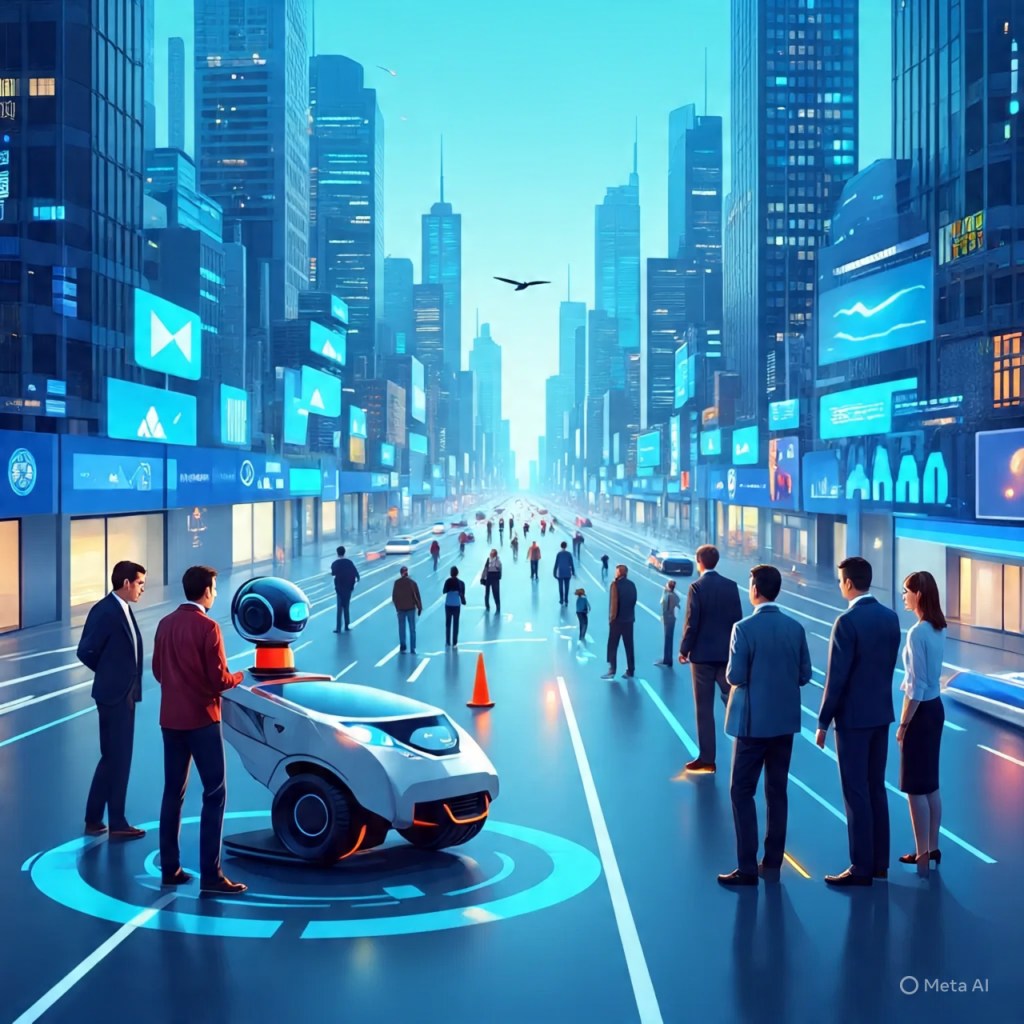
Digital India 2.0: Digital Transformation for Viksit Bharat @2047

Digital Transformation and Economic Growth

Source: Generated using Meta AI by the author

Viksit Bharat @2047 aims to transform India into a developed nation by 2047. Broadly, the vision of Viksit Bharat can be divided into five key thematic areas: thriving and sustainable economy; empowering citizens; innovation, science and technology; good governance and security; and enhancing India’s global standing. As India has achieved remarkable success in digitalising its economy under the Digital India programme, can this programme be reimagined to leverage digital transformation in these areas to achieve the vision of Viksit Bharat?

Digitalization can significantly contribute to a thriving economy. India’s over $400 billion digital economy in itself is a major contributor to the overall economy and its continued growth is essential for achieving the vision of Viksit Bharat. Digital public infrastructure (DPI) like Aadhaar and UPI have revolutionalised online identity authentication and payments and have empowered individuals and businesses. Similar DPI initiatives, public-private partnerships (PPPs) and leveraging Artificial Intelligence (AI) and other emerging technologies can digitally transform sectors like manufacturing, healthcare, education, agriculture, etc. and enhance economic growth. 

Improving access to digital services and infrastructure and digital empowerment through initiatives like BHASHINI can enhance digital inclusion, particularly for disadvantaged communities.  

Digital transformation is also essential for fostering innovation and technological advancement. It can also be used to promote green technologies and sustainable practices. Smart cities initiative is already showing how scalable digital transformation and PPPs can address challenges like sustainable urban planning and climate change. Digitalisation can also enhance good governance and improve India’s standing as a global leader in sustainable economic growth.

To achieve the vision of Viksit Bharat and create such an economy and society wide impact over the next two decades, the Digital India programme needs to be reimagined as a cross-sectoral mission based on a whole of government and whole of society framework.

This new mission, Digital India 2.0, needs to be architected on certain key foundations for accelerating digital transformation across various sectors. First, it needs to focus on creating world-class digital infrastructure including AI-ready data centres and high-speed connectivity through fibre and mobile reaching all villages. With AI emerging as a key platform technology that would drive transformation across various sectors in future, the need for making India a global hub for AI-ready data centres with high-performance hardware and robust network infrastructure cannot be overemphasized. Expansion of data centre infrastructure would also address the need to ensure data privacy, security and data storage within the country.

Second, digital government and digital services need to undergo a major transformation through a focus on delivering integrated, pro-active and personalised services using AI. This would require building a unified AI stack as a digital public infrastructure (DPI) comprising AI-ready data centres, access to curated data sets, and AI models and applications to enable the ministries and departments to develop their own use cases quickly. 

Third, the growth of the digital economy needs to be accelerated so that its share increases to at least 25% of the overall GDP of $30 trillion by 2047 from its present level of around 11%. This requires sustained growth in electronics and semiconductors, IT-ITES, and emerging technologies, such as AI, 6G, quantum computing, IoT, etc. However, a major contribution to the growth of the digital economy is likely to come from digitalisation of the traditional sectors, e.g., agriculture, health, education, financial services, retail, etc. Building a vibrant start-up ecosystem in these domains is essential for achieving this goal.

Fourth, we need to revamp our legal and regulatory framework to support the rapid growth of the digital economy. The major issues that need to be addressed include concerns on data privacy, cyber security, accountability of online platforms including social media, and fairness and transparency of AI algorithms. Though privacy concerns have been addressed through the new Digital Personal Data Protection (DPDP) Act, a full revamp of the 25 year old IT Act needs to be undertaken to address these issues comprehensively.

Fifth, rapid advancements in strategic and emerging technologies with ownership of intellectual property is a sine qua non for becoming a global leader in digital economy. We need to quickly formulate national strategies in these critical areas and fund the flagship initiatives. The IndiaAI Mission is a step in the right direction. However, we need to build our own foundational models in AI to ensure strategic autonomy in this rapidly advancing technology. Similarly, a national policy on data governance also needs to be formulated to ensure easier access to data by all the ministries, states, industry, start-ups, researchers, etc. This would allow rapid innovations to happen in these technologies.

Last, but not the least, skilling and capacity building in digital technologies at all levels is vital for rapid growth in the digital economy. India should rightly aim at becoming the skill and talent capital of the world.

Digital India 2.0, with its focus on a whole-of-government and whole-of-society approach, can accelerate digital transformation across various sectors to achieve the vision of Viksit Bharat.

(The views expressed are personal.)

Transforming the Government Digitally: Challenges and Opportunities

India is witnessing a great digital transformation today in all spheres of economy and society. Digital technologies are being deployed by both the public and the private sectors to increase efficiencies, transform business processes and deliver greater value to their stakeholders. The government has launched the ambitious Digital India programme with the goal of transforming the government and the economy using digital technologies.

How are these digital technologies going to impact governance in the coming decade? How are the existing business processes and public service delivery models going to change? What are the challenges to such a transformation? In this article, I examine these aspects with specific reference to the advent of the latest technologies such as cloud, big data, analytics, social media, mobile, automation, Internet of Things (IoT), artificial intelligence (AI) and robotics. Some of these technologies are rapidly becoming mainstream and are significantly impacting the industry and the way applications are being developed and deployed in various domains.

Some of these new technologies are already being used by the government to make the delivery of public services more efficient and improve the government-citizen interaction. For example, the Mobile Seva project of the Government of India has significantly improved access to public services by bringing a large number of them on the mobile platform. The Digital India programme has also made cloud as the platform of choice for many departments for efficient use of computing resources and quick deployment of applications. The government is also using social media effectively to communicate with the citizens and other stakeholders. MyGov.in platform is being used by many departments to solicit views of all stakeholders on various government programmes.

Can the other emerging technologies such as big data, analytics, automation, IoT, AI and robotics impact governance? The potential of these technologies to transform business models and bring new products and services is enormous. Industries in several sectors have already started using these technologies to increase efficiency, reduce costs and improve their customers’ experiences. For example, automation of repetitive and rule based tasks is causing a significant disruption in the information technology (IT) services industry causing fears of layoffs. Government processes can be reengineered to take advantage of automation to make the delivery of services more efficient and accessible. Similarly, robots can also be used to improve citizen interaction when people visit government offices for seeking information or availing services.  

Big data and analytics are being used by a number of industries to generate new insights into consumer behavior and offer customized services. Government departments can also effectively use these technologies to analyze patterns in citizen demand for various services and tailor delivery mechanisms accordingly. Big data and analytics can also help the government in transitioning to a data driven and evidence-based policy environment to improve the quality of outcomes.

Internet of Things has the potential to lead to a truly connected world and enable real time responses to various events and situations. Missions such as smart cities can very effectively exploit IoT to deliver a truly seamless and connected urban infrastructure and improve the living experiences of citizens.

What are the enablers to such digital transformation of the government in future? There are four critical factors that can help the government in fully exploiting the emerging technologies to become more efficient and dramatically improve the quality of governance and delivery of services to citizens and businesses. First, the government must have a clear and long-term digital strategy aimed at taking full advantage of the potential of these technologies. The digital strategy must aim at end-to-end transformation of the entire business processes and not just the service delivery interface.

Secondly, leadership is critical to such a digital transformation of the government. Presence of leaders capable of understanding the full implications of the emerging technologies of the future and driving change within the organizations accordingly to transform business processes and public interface is extremely important. In India, this would require massive capacity building efforts at senior management levels across the government to prepare the leaders adequately. Government should also involve capable leaders from the private sector to drive this transformation.

Thirdly, achieving a government wide transformation would require massive capacity building and skilling of the government workforce. Presently, these capabilities are singularly lacking in government organizations despite recent efforts in this direction. Capacity building is required at all levels across the entire government and not just in the specialized units dealing with computerization.

Next, the government would also need to ensure that appropriate applications using the emerging technologies are developed and deployed effectively and used across various domains to derive the desired outcomes. This would entail creating and sustaining an organization wide digital culture and focus on change management to ensure that the entire organization is committed to digitally driven transformation.

Finally, such a massive programme would need the holistic involvement of all the stakeholders, in particular the citizens and businesses and the industry partners to succeed. The citizens and businesses, who are the primary beneficiaries, would need to enhance their digital literacy to take full advantage of a government wide digital transformation. The efforts being undertaken to make the citizens digitally literate under the Digital India programme augur well for such an endeavour in future.

What are the challenges that the government might face in making this transformation a reality? The key challenges include developing leadership and building workforce skills, finding adequate financial resources, addressing security concerns and developing a digital culture within the organization and amongst the stakeholders. The government would also need to put in place a suitable legal framework to drive the digital transformation. These challenges need to be adequately addressed to make this entire endeavour a success. The emerging technologies present a great opportunity for us to transform our governance digitally to make all services truly online, end-to-end, connected and integrated in the next decade. We must overcome the challenges in achieving this vision through strategic planning, devoting adequate resources, building capabilities at all levels, developing and deploying appropriate applications and involving all the stakeholders. We are the world leaders in IT and it is the right time that we take the lead to use these technologies for transforming the quality of governance in the country.

(The above article was originally published in the eGov Magazine in its July 2017 issue. It is available at: https://egov.eletsonline.com/2017/08/transforming-the-government-digitally-challenges-and-opportunities/).