

The next wave of digitization needs to ensure that digital opportunities should ..
Tag: India
Unduly Worried Over New Information Technology Rules

In a communication dated June 11, three UN Special Rapporteurs raised serious concerns over provisions of the Information Technology (Intermediary Guidelines and Digital Media Ethics Code) Rules, 2021. They claim that these provisions do not meet the standards of rights to privacy and to freedom of expression as per the Articles 17 and 19 of the International Covenant on Civil and Political Rights (ICCPR) and that some of the due diligence obligations of intermediaries may infringe upon a ‘’wide range of human rights”.
They claim that the terms such as “ethnically or racially objectionable”, “harmful to child”, “impersonates another person”, etc. are broad and lack clear definitions and may lead to arbitrary application. Nothing could be further from truth. These terms have been very well defined and understood in both Indian and international law and jurisprudence. The Rule 3(1)(b) of the IT Rules specifies these terms clearly as part of a user agreement that the intermediaries must publish. They are aimed at bringing more transparency in how intermediaries deal with the user content and are not violative of the UN’s Joint Declaration on Freedom of Expression and “Fake News”, Disinformation and Propaganda.
It must also be mentioned that the Rule 3(1)(d) allows for removal of an unlawful content relating to sovereignty and integrity of India, security of the state, friendly relations with foreign states, public order, etc. only upon an order by a competent court or by the Appropriate Government. This is as per the due process specified by the Supreme Court in the Shreya Singhal Vs Union of India case in 2015. Given the potential of immense harm that can be caused by such unlawful content being freely available online, the time limit of 36 hours for their removal after due process is reasonable. Similarly, the time limit of 72 hours for providing information for investigation in response to lawful requests in writing from government agencies is entirely reasonable. The Rule 3(2) also provides for establishing a grievance redressal mechanism by the intermediaries and resolution of user complaints within 15 days. However, content in the nature of ‘revenge porn’ must be removed within 24 hours. Again, given the potential of immense personal damage that such acts can cause to the dignity of women and children, this time limit is reasonable.
The liability of the Chief Compliance Officer under Rule 4(1) of a significant social media intermediary is not arbitrary. He or she can be held liable in any proceeding only after a due process of law. This has been clearly specified in the rule itself.
The apprehensions about the Rules harming privacy are also misplaced. The Rule 4(2) requires the significant social media intermediaries to provide only the metadata about the first originator of a viral message that may be required for investigation of a serious crime relating to sovereignty and integrity of India, public order, rape, child sexual abuse, etc. that are punishable with a minimum term of five years. This again is after a lawful order is passed by a court or a competent authority and where there is no other less intrusive means of obtaining such information. There is no provision to ask the intermediary to break any encryption to obtain the contents of the message. In fact, the content is provided by the law enforcement agencies to the intermediary. Lawful investigation of crimes cannot be termed as harmful to privacy. Several countries, such as the US, UK and Australia have enacted laws that allow for far more intrusive interception of encrypted messages, including their decryption.
The concerns with regard to media freedom are also misplaced. The section 5 of the UN’s Joint Declaration on Freedom of Expression and “Fake News”, specifically enjoins upon the media outlets to provide for self-regulation at the individual media outlet level and/or at the media sector level. The IT Rules provide for a three-tier system of regulation, in which the government oversight mechanism comes in at the third level only after the first two tiers of self-regulation have failed to produce a resolution. The rules clearly specify the due process for the government oversight mechanism.
India is a vibrant democracy with a long tradition of rule of law and respect for freedom of expression and privacy. The IT Rules aim at empowering the users to enable them to exercise their right to freedom of expression responsibly and prevent the misuse of these platforms for unlawful purposes. The selective interpretation of the provisions of the IT Rules by the UN Rapporteurs is, at best, disingenuous.
(The above article appeared in The Economic Times on July 11, 2021 and is available at https://economictimes.indiatimes.com/opinion/et-commentary/unduly-worried-over-new-rules/articleshow/84323812.cms?from=mdr. The views expressed by the author are personal.)
The COVID-19 Pandemic in India: Comparing Early Phase of Growth with Selected Countries
COVID-19 pandemic has affected the vast majority of nations around the world. However, different countries have experienced different trajectories of growth in coronavirus infections. In India also, the pandemic is showing a growing trajectory currently despite a late start. In this article, I analyze the early phase of growth of the pandemic in selected countries in terms of growth of the total number of cases and total number of deaths with time and examine how they compare with the current phase of growth of the cases in India. Such a comparison might be helpful in understanding the future trends of growth of the pandemic in India and the steps to be taken to contain its spread or ‘flatten’ the curve.
As the coronavirus cases in India have recently crossed 3,000, I take this figure for comparing the early phase of growth in selected countries and compare the number of days taken to reach 3,000 cases from the first 100 cases. I select ten countries for comparison based on the highest number of confirmed cases as on April 4, 2020 (I have excluded China as comparable data on the early phase of growth in that country are not available). For easier comparison, I take five countries each in two groups along with India in each group. In the first set, I examine the early phase of growth in USA, Italy, Spain, Germany and France with that of India to compare the number of days taken for the cases to reach 3,000 from an initial level of 100. This is depicted in the Fig. 1. As can be seen, it has taken 21 days in India for the cases to grow from 100 to 3,000. A significant part of the rise in cases in India has occurred in the last 3-4 days of this period, which has been linked to the Tablighi-Jamaat event in Delhi [1], [2]. However, the time taken in India to reach this level of cases is still much longer when compared to the duration for the same number of cases in the other countries in the group showing that the curve has been much ‘flatter’ in India.
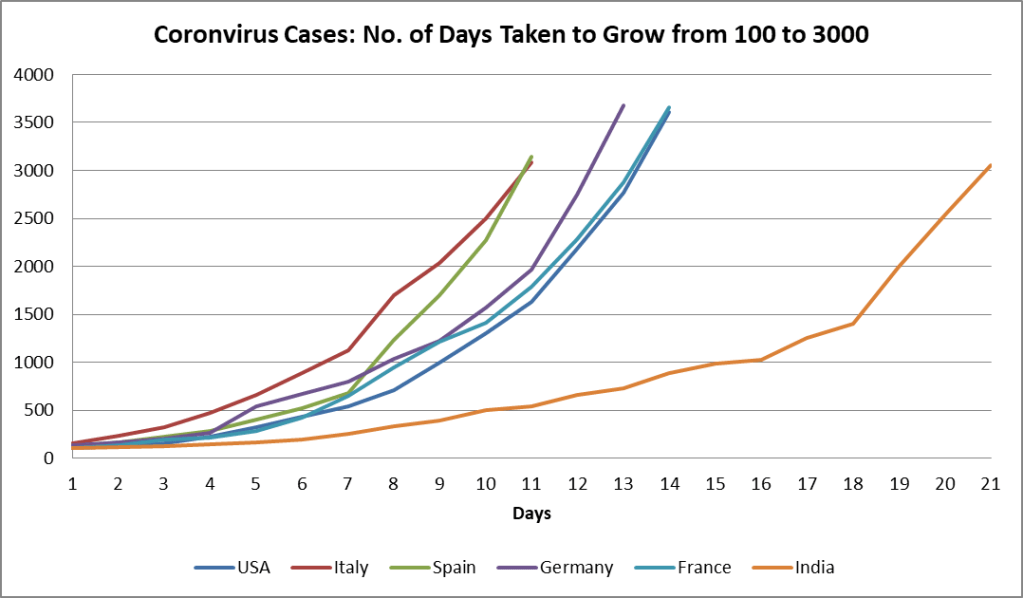
Fig.1: Coronavirus cases in select countries – No. of days taken to grow from 100 to 3000
Source: The author, with data from https://www.worldometers.info/coronavirus/ (accessed on April 4, 2020).
Fig. 2 depicts the same comparison with the other five countries in the group, namely Iran, UK, Turkey, Switzerland and Belgium. Again, we can see that the growth trajectory of the cases has been much steeper in all these countries when compared to the same for India.

Fig.2: Coronavirus cases in select countries – No. of days taken to grow from 100 to 3000
Source: The author, with data from https://www.worldometers.info/coronavirus/ (accessed on April 4, 2020).
Trends in Deaths Due to Coronavirus
It is also helpful to understand the growth trends in deaths occurring in the above countries due to COVID-19. As the number of deaths due to coronavirus in India has crossed 50 recently, I take this figure for comparative analysis of the selected countries for the number of days taken for the deaths to reach 50 starting from the first death. Fig. 3 depicts this trend. As can be observed, France is the only country in this group that has taken more days than India to cross the first 50 deaths. However, the growth rate of deaths has been much steeper in France after this stage.

Fig.3: Deaths due to coronavirus in select countries – No. of days taken to reach first 50 deaths.
Source: The author, with data from https://www.worldometers.info/coronavirus/ (accessed on April 5, 2020).
Fig. 4 below depicts the same comparative picture for the second group of countries comprising Iran, UK, Turkey, Switzerland and Belgium. As we can see, the growth trajectory of the total deaths in all these countries has been significantly steeper than that in India.
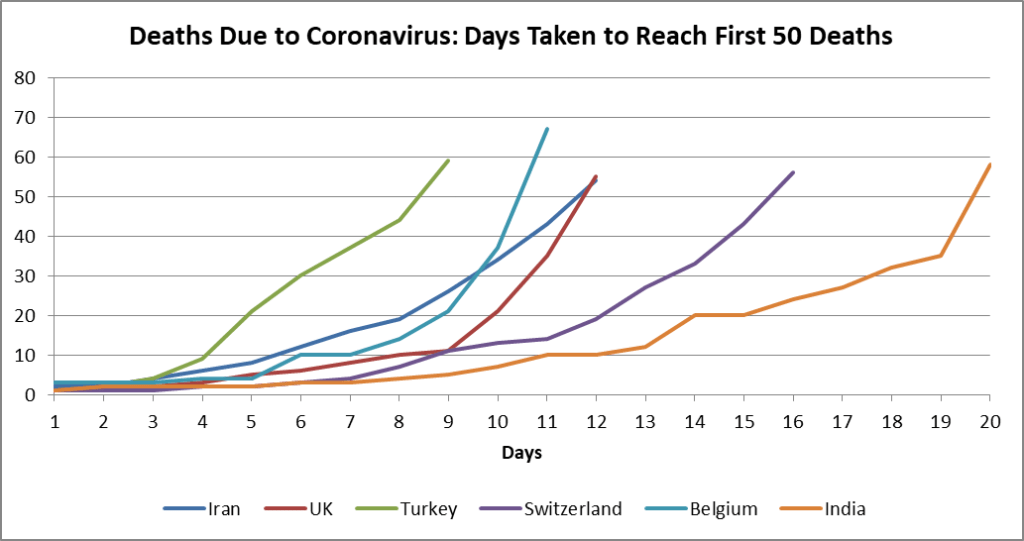
Fig.4: Deaths due to coronavirus in select countries – No. of days taken to reach first 50 deaths.
Source: The author, with data from https://www.worldometers.info/coronavirus/ (accessed on April 5, 2020).
As the analysis above shows, at this stage, the growth trajectory of the pandemic in terms of both the total number of cases and the total number of deaths looks significantly flatter in India when compared to the same during the early phases in the above selected countries. It is relevant to note here that I have not examined the impact of the lockdown on the growth of the cases as comparable data on the impact of lockdowns from the above selected countries during the early phase of the pandemic are not available.
References:
- https://www.ndtv.com/india-news/coronavirus-tablighi-jamaat-30-per-cent-of-coronavirus-cases-linked-to-delhi-mosque-event-government-2206163 (accessed on April 6, 2020).
- https://www.washingtonpost.com/world/asia_pacific/india-coronavirus-tablighi-jamaat-delhi/2020/04/02/abdc5af0-7386-11ea-ad9b-254ec99993bc_story.html (accessed on April 6, 2020).
(The views expressed in this article are personal).
The Indian Pharmaceutical Industry: The Next Star On The Horizon
In the post-liberalization era, the IT sector has been the star performer in the Indian economic growth story in popular perception. The success of the pharmaceutical industry in India during the same period is not so well known, though it has also experienced rapid growth at a CAGR of around 12-15% consistently. The sector was valued at over US $37 billion in 2018. Pharma exports from India reached over US $19 billion in 2018-19 with over 20% of the global exports in generics coming from India. India supplies over 50% of the global demand for all vaccines and over 40% of all generics in the US.
The Indian pharma sector currently accounts for about 10% of the global pharma industry in terms of volume and around 2.5% in terms of value. It is now ranked the third largest worldwide in volume terms and the 13th largest in terms of value. It is projected to grow to over US$50 billion by 2020. Under the ‘Pharma Vision 2020’, the government is committed to make India as the world’s leading destination for end-to-end drug discovery and innovation by 2020. How can this vision be achieved?
There are several factors already present that are working to India’s advantage in the pharma sector. These include its ability to produce high quality medicines at comparatively cheaper costs and increasing private sector investments in R&D. Indian pharma companies are now investing around 8.5% of their sales on R&D. India also allows 100% FDI in the pharma sector under the automatic route. With increasing penetration of health insurance and improving drug affordability due to rising economic prosperity, India is well placed for a major expansion in this sector. However, to become the world leader in drug discovery and innovation, several key initiatives by the government and the industry need to be put in place.
Today, India primarily produces branded generics and has limited capabilities in R&D, new drug development and innovation. As India has already introduced product patents, the Indian pharma companies need to increase their expenditure on R&D significantly to develop new drugs and boost sales.
Secondly, Indian companies also need to focus on diversifying exports beyond generics to gain market share and increase value addition. Currently, the Indian firms mostly focus on conventional tablets and capsules with very little presence in non-conventional dosage forms, advanced formulations and biotech-based medicines. This again requires higher focus on R&D and innovation. The Indian firms also need to expand their presence in new markets, notably in Latin America, Russia and Eastern Europe.
Thirdly, joint ventures with multinational companies can help in improving R&D and new drug discovery. The total cumulative FDI in the pharma sector stood at around US$ 16 billion during April 2000 to March 2019. There is good scope for attracting more FDI in this sector if there is greater focus on R&D and innovation. Expansion by Indian firms through acquisitions in overseas markets can also help in improving efficiencies and gaining market share.
India already has the key growth drivers in place for the pharma sector, both on the demand and the supply sides. On the demand side, rising incomes are improving the affordability of drugs and increasing penetration of insurance is helping in improving access to quality healthcare services. The PM Jan Aarogya Yojana is helping to expand the coverage of health insurance to a much wider section of the population including in the rural areas. The overall government expenditure on health has shown a CAGR of over 12% during the last seven years leading to a significant rise in healthcare services. On the supply side, India is already a major global hub for manufacturing of generics with over 22% of all the USFDA approved plants worldwide. India enjoys a significant cost advantage and the availability of skilled manpower would fuel further growth in this sector. About 120 drugs are expected to go off-patent during the next ten years with estimated US$80-250 billion revenue worldwide, which presents a big opportunity to the Indian firms.
To boost the growth of the pharma sector further, several policy measures need to be taken. These include reduction in time required for approval of new manufacturing facilities and NOC for export licenses, single window clearance mechanism for drug approvals, and support for technology upgradation. The recent move by the government to set up mega pharmaceutical parks would help in reducing dependence on imports of APIs or bulk drugs. The National Biopharma Mission is expected to support the development of biopharmaceuticals and new drug development in India. India already enjoys several advantages in the pharmaceutical sector due to its low cost of production, availability of skilled human resources and world-class manufacturing facilities. However, it needs to significantly boost R&D and innovation and focus on new drug discovery. If appropriate initiatives by the government and the industry are taken to develop the sector further, it can certainly become the next star on the horizon and make India the world leader in pharmaceuticals.
Source of the image: https://www.europeanpharmaceuticalreview.com/news/65288/indias-pharmaceutical-100bn/
The Seven Pagodas: An Ancient Abode Of The Gods Called Mamallapuram
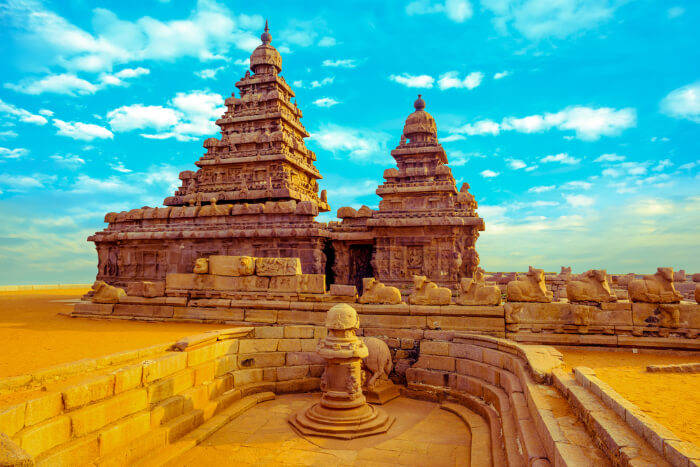
Mamallapuram is in the news globally due to the impending summit of the Indian Prime Minister with the Chinese premier during October 11-12, 2019. Situated on the east coast around 60 kilometres south of Chennai, this ancient town has a rich history dating back to the 1st century BC. Declared as a UNESCO World Heritage Site, the town is a major tourist attraction in the state of Tamil Nadu in India.
Mamallapuram was a major seaport during the first millennium CE and the region thrived during the reign of the Pallavas. It was founded by the Pallava king Narasimhavarman I during the 7th century AD. The name of the town itself is perhaps derived from “Mamallan”, meaning a great warrior, a reference to Narasimhavarman I. It was ruled by the Pallava kings from Kanchipuram, the capital of their kingdom, from the 3rd to the 9th centuries AD. They used the port as a major trading centre with Sri Lanka and South-East Asia. The port was also an active hub of global trade during this period as Chinese and Roman coins from the 4th century AD have been found at this place.
The town was also known by several other names during ancient times, such as Mamallapatinam and Mahabalipuram. The ancient town had seven pagodas on the shore, of which only one, known as the Shore Temple, now survives. Due to these seven pagodas, the town was also known as The Seven Pagodas to the ancient mariners.
The temples at Mamallapuram depict events mainly from the Indian epic Mahabharata and were built largely during the reign of Narasimhavarman and his successor Rajasimhavarman. There are 32 monuments in the town spread over an area of around four square kilometres. The major monuments include rathas or temples in the form of chariots, mandapas or cave sanctuaries, massive open-air rock reliefs such as the Descent of the Ganges, and the famous 7th century Shore Temple dedicated mainly to Lord Shiva and Lord Vishnu.
The Chinese Connection
Mamallapuram also has a significant historical connection with China. The port was a major trading hub with China, Sri Lanka and South-East Asian countries. The Chinese traveller Hiuen Tsang is said to have visited the town. It is also believed that Bodhidharma, a famous Buddhist Monk in China, was a son of a Pallava king who travelled to China from Mamallapuram in the 6th century AD.
With its rich history and historical connections with China, Mamallapuram is the most appropriate place for a historic summit between the leaders of the two most populous nations and emerging superpowers in the world.
Source of the Photograph: http://www.traveltriangle.com
(The author is a senior IAS officer in Tamil Nadu and is currently working as the Principal Secretary, MSME Department. The views are personal).

