
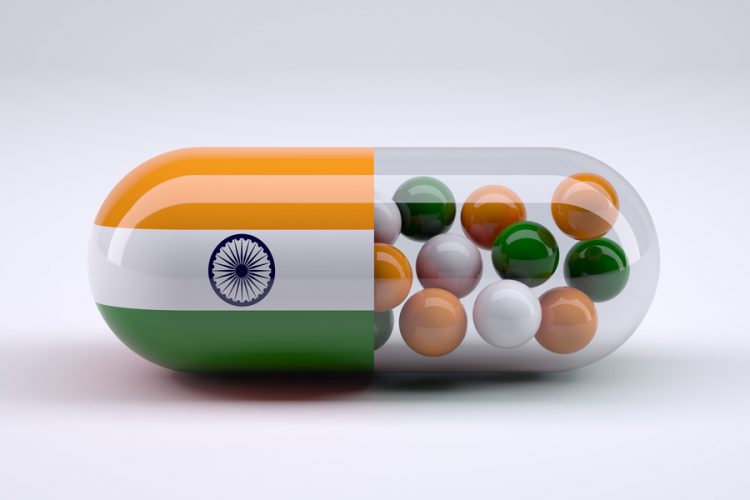
In the post-liberalization era, the IT sector has been the star performer in the Indian economic growth story in popular perception. The success of the pharmaceutical industry in India during the same period is not so well known, though it has also experienced rapid growth at a CAGR of around 12-15% consistently. The sector was valued at over US $37 billion in 2018. Pharma exports from India reached over US $19 billion in 2018-19 with over 20% of the global exports in generics coming from India. India supplies over 50% of the global demand for all vaccines and over 40% of all generics in the US.
The Indian pharma sector currently accounts for about 10% of the global pharma industry in terms of volume and around 2.5% in terms of value. It is now ranked the third largest worldwide in volume terms and the 13th largest in terms of value. It is projected to grow to over US$50 billion by 2020. Under the ‘Pharma Vision 2020’, the government is committed to make India as the world’s leading destination for end-to-end drug discovery and innovation by 2020. How can this vision be achieved?
There are several factors already present that are working to India’s advantage in the pharma sector. These include its ability to produce high quality medicines at comparatively cheaper costs and increasing private sector investments in R&D. Indian pharma companies are now investing around 8.5% of their sales on R&D. India also allows 100% FDI in the pharma sector under the automatic route. With increasing penetration of health insurance and improving drug affordability due to rising economic prosperity, India is well placed for a major expansion in this sector. However, to become the world leader in drug discovery and innovation, several key initiatives by the government and the industry need to be put in place.
Today, India primarily produces branded generics and has limited capabilities in R&D, new drug development and innovation. As India has already introduced product patents, the Indian pharma companies need to increase their expenditure on R&D significantly to develop new drugs and boost sales.
Secondly, Indian companies also need to focus on diversifying exports beyond generics to gain market share and increase value addition. Currently, the Indian firms mostly focus on conventional tablets and capsules with very little presence in non-conventional dosage forms, advanced formulations and biotech-based medicines. This again requires higher focus on R&D and innovation. The Indian firms also need to expand their presence in new markets, notably in Latin America, Russia and Eastern Europe.
Thirdly, joint ventures with multinational companies can help in improving R&D and new drug discovery. The total cumulative FDI in the pharma sector stood at around US$ 16 billion during April 2000 to March 2019. There is good scope for attracting more FDI in this sector if there is greater focus on R&D and innovation. Expansion by Indian firms through acquisitions in overseas markets can also help in improving efficiencies and gaining market share.
India already has the key growth drivers in place for the pharma sector, both on the demand and the supply sides. On the demand side, rising incomes are improving the affordability of drugs and increasing penetration of insurance is helping in improving access to quality healthcare services. The PM Jan Aarogya Yojana is helping to expand the coverage of health insurance to a much wider section of the population including in the rural areas. The overall government expenditure on health has shown a CAGR of over 12% during the last seven years leading to a significant rise in healthcare services. On the supply side, India is already a major global hub for manufacturing of generics with over 22% of all the USFDA approved plants worldwide. India enjoys a significant cost advantage and the availability of skilled manpower would fuel further growth in this sector. About 120 drugs are expected to go off-patent during the next ten years with estimated US$80-250 billion revenue worldwide, which presents a big opportunity to the Indian firms.
To boost the growth of the pharma sector further, several policy measures need to be taken. These include reduction in time required for approval of new manufacturing facilities and NOC for export licenses, single window clearance mechanism for drug approvals, and support for technology upgradation. The recent move by the government to set up mega pharmaceutical parks would help in reducing dependence on imports of APIs or bulk drugs. The National Biopharma Mission is expected to support the development of biopharmaceuticals and new drug development in India. India already enjoys several advantages in the pharmaceutical sector due to its low cost of production, availability of skilled human resources and world-class manufacturing facilities. However, it needs to significantly boost R&D and innovation and focus on new drug discovery. If appropriate initiatives by the government and the industry are taken to develop the sector further, it can certainly become the next star on the horizon and make India the world leader in pharmaceuticals.
Source of the image: https://www.europeanpharmaceuticalreview.com/news/65288/indias-pharmaceutical-100bn/
 Ideas That Make You Think And Do